
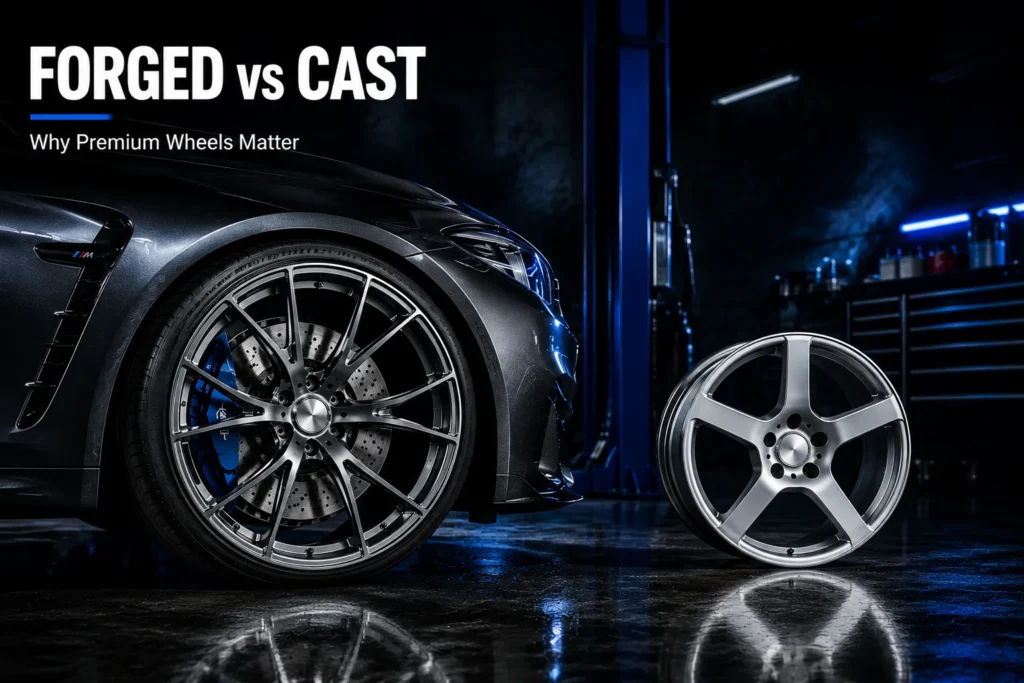
If you have started shopping for new wheels, you have probably run into two terms over and over: forged and cast. They look similar in photos, but the way they are built, and the way they perform, are worlds apart.
At CookeForged, every wheel we build starts as a solid billet of aluminum, not a mold. That single choice is what separates a forged wheel from a cast one, and it is why forged wheels cost more, last longer, and perform better under real driving conditions. Here is what actually makes them different, and why the investment is worth it.
How Cast Wheels Are Made
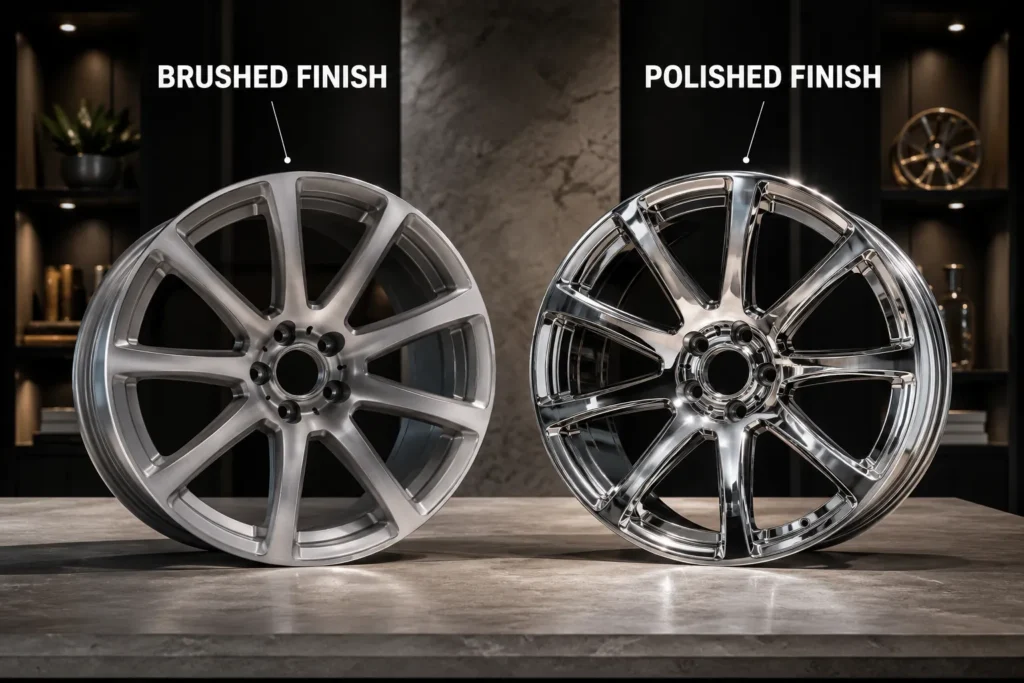
Cast wheels are made by pouring molten aluminum into a mold and letting it cool into shape. It is a fast and relatively low cost manufacturing method, which is why most factory wheels and budget aftermarket wheels are cast.
The tradeoff is in the metal itself. As the aluminum cools inside the mold, tiny air pockets and inconsistencies can form inside the metal structure. To compensate for that weakness, manufacturers add extra material to the spokes and barrel to keep the wheel strong enough to pass safety standards. That extra material adds weight, and the internal porosity means cast wheels are more prone to cracking or breaking on hard impacts, like curbs, potholes, or track use.
Cast wheels are not a bad choice. They work well for daily driving and offer a lower price point with a wide range of styles. But they are not built for performance demands or long term durability the way a forged wheel is.
How Forged Wheels Are Made
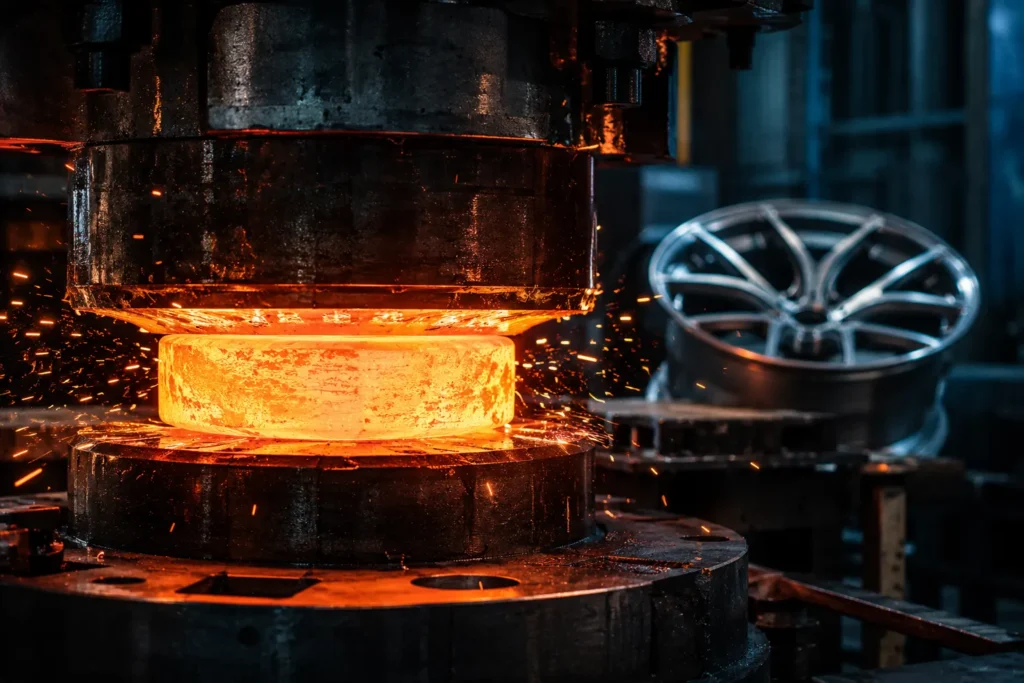
Forging is a completely different process. Instead of pouring liquid metal into a mold, manufacturers take a solid billet of aircraft grade aluminum alloy, usually 6061-T6, and compress it under extreme heat and thousands of tons of pressure. This forces the metal’s internal grain structure to align and become denser, rather than settling randomly the way it does in a mold.
That aligned grain structure is the reason forged wheels are stronger without needing extra material. Because the metal itself is stronger, manufacturers can use less of it, which is what makes forged wheels significantly lighter than cast wheels of the same size, often 25 to 30 percent lighter.
At CookeForged, this is the foundation of everything we build. Every wheel goes through precision machining and finishing after the forging process, so the final product is not just strong, it is built to your exact specifications, from size and offset to finish.
Forged vs. Cast: Side by Side
Weight
Forged wheels are lighter, typically 25 to 30 percent less than a comparable cast wheel. Less rotational and unsprung weight means your car accelerates quicker, brakes more efficiently, and handles with more precision, since the suspension is not working as hard to control the wheel’s mass.
Strength
Forged wheels resist cracking, bending, and denting far better than cast wheels because the metal has no internal porosity. Cast wheels tend to fail more suddenly under hard impact, since the brittle, porous structure has less give. Forged wheels are more likely to bend on a severe impact rather than shatter, which matters both for safety and for repairability.
Performance
Less unsprung weight translates directly into sharper handling, quicker steering response, and better braking. This is why forged wheels are the standard choice for track cars, high performance builds, and anyone who wants their car to feel noticeably different, not just look different.
Customization
Forged wheels, especially 2-piece and 3-piece constructions, allow for far more control over width, offset, and fitment than cast wheels typically offer. This is a major reason enthusiasts choose forged wheels for a build that needs an exact stance or fitment, not just a wheel that is close enough.
Cost
There is no getting around it: forged wheels cost more. The billet aluminum, the forging equipment, and the precision machining involved all add cost that a mass produced cast wheel does not carry. But that cost reflects a wheel built to perform and last, not one built to hit a price point.
Why the Investment Is Worth It
A cast wheel is a reasonable choice if you are looking for the lowest price and standard driving conditions are all you need. But if you care about how your car handles, how it holds up over years of driving, or how it looks with a custom fitment that a stock wheel simply cannot achieve, forged is the smarter long term investment.
Forged wheels do not just perform better. They also tend to hold their value and their condition longer, since they are far less likely to crack, warp, or need replacing after a hard impact that a cast wheel might not survive.
Built to Your Exact Spec
Every wheel that leaves CookeForged starts with the same forging process that puts strength and precision first. From there, we work with you to build a wheel around your vehicle, your style, and your performance goals, whether that means a 1-piece monoblock design or a fully custom 3-piece build with the exact offset your car needs.
If you are ready to move up from a stock or cast wheel to something built specifically for your car, get your free custom quote and let’s design it together.



"These rims completely changed the look of my car. The finish and detailing are top-notch, and you can instantly feel the difference in performance. Cooke Forged really delivers quality and precision."