
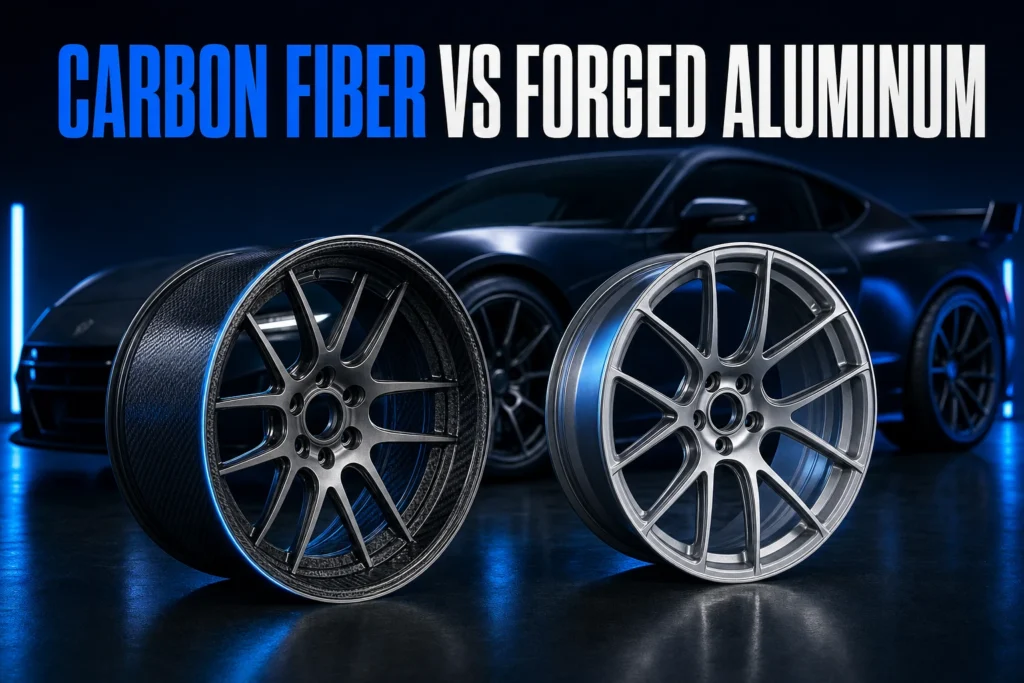
Choosing between carbon fiber and forged aluminum wheels isn’t just a question of which material is ‘better.’ The right choice depends on your vehicle, how you drive, the wheel’s construction, and what you want from the upgrade.
There’s also an important detail: a ‘carbon fiber wheel’ can describe more than one construction. Some wheels are made primarily from carbon-fiber composite. Others combine a carbon-fiber barrel with a forged aluminum center. That hybrid design is different from a wheel made entirely from forged aluminum.
Here’s what to know before deciding.
First, understand the wheel’s construction
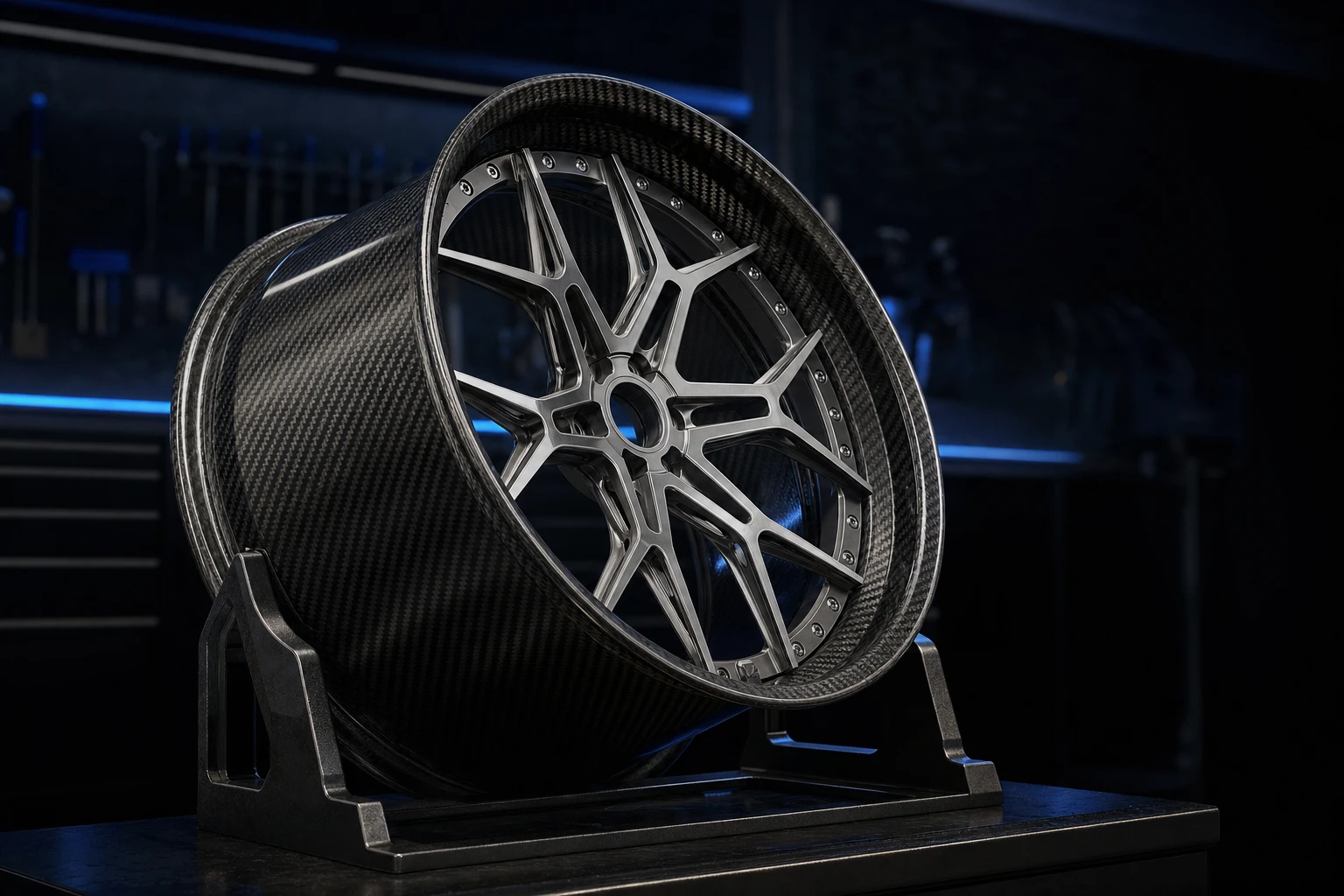
A forged aluminum wheel is made from aluminum shaped and machined into a wheel. A carbon-fiber wheel uses a composite material: carbon fibers held in a resin matrix. A carbon-fiber and forged-aluminum hybrid combines those materials, often with a forged aluminum center and a carbon-fiber barrel.
CookeForged describes its carbon-fiber offering as a carbon-fiber barrel paired with a forged aluminum center. Check the construction of the specific wheel you’re considering, since the material and design can vary by model.
Carbon fiber wheels: the benefits and tradeoffs
Potentially lower weight
Reducing wheel weight can reduce both unsprung mass (the weight the suspension has to control) and rotational inertia. The size of the difference depends on the wheels being compared, including their diameter, width and design.
Some manufacturers report substantial weight savings on particular carbon-fiber models. For example, Carbon Revolution lists model-specific comparisons against aluminum wheels, but those figures apply to those particular products and are not a universal estimate for every carbon-fiber wheel.

A distinctive look
Carbon-fiber barrels can give a build a more technical appearance, especially when paired with a detailed forged center. Hybrid construction also lets the two materials serve different parts of the wheel’s design.
More specialized care
Carbon-fiber wheels need to be handled and serviced according to the manufacturer’s instructions. Tire changes should be performed by a shop with experience servicing premium wheels. Carbon Revolution, for example, advises using care during tire changes and sets specific cleaning and repair guidance for its own products. Follow the instructions for the exact wheel you buy.
Damage needs expert assessment
A scrape to a wheel’s clear coat is different from damage to its structure. If a carbon-fiber wheel has been struck, cracked or otherwise damaged, have it assessed by the wheel manufacturer or a qualified specialist before driving on it. Repair options vary by wheel and by the type and location of damage.
Forged aluminum wheels: the benefits and tradeoffs
A strong, versatile option
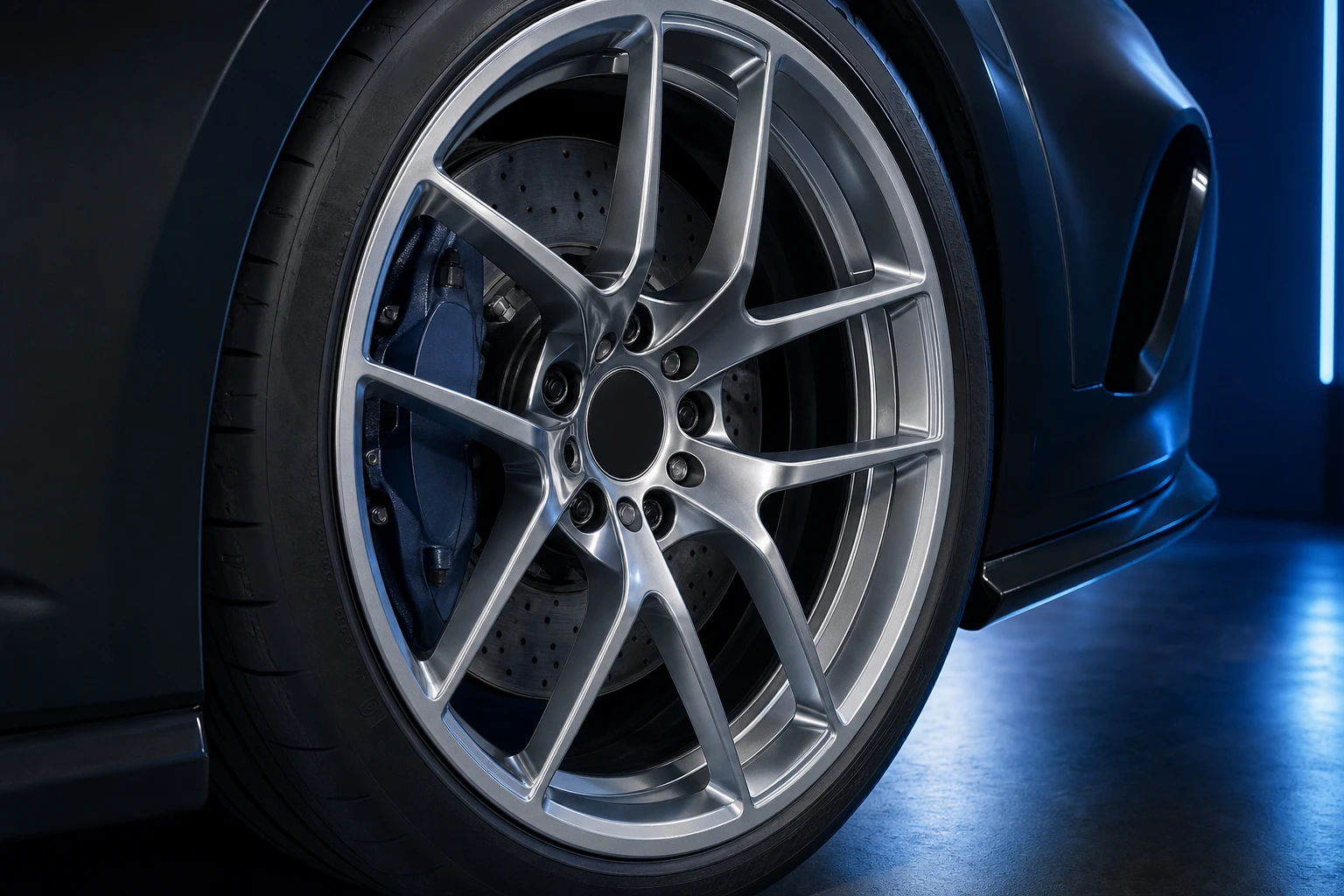
Forged aluminum is a popular choice for performance and luxury vehicles because it can be made in a wide range of sizes, widths, offsets and finishes. For a custom order, the wheel still needs to be matched to the vehicle and its intended use.
Broad customization options
Forged aluminum wheels can suit drivers who want a particular spoke design, finish or fitment. CookeForged says its custom forged wheels can be made to match a vehicle’s specifications, with size and fitment options depending on the model. Confirm the available specifications with the team when requesting a quote.
Cost and repairability vary
The price of either type depends on its construction, dimensions, finish and application. Carbon-fiber options may carry a higher price, but the difference depends on the specific products being compared. Ask for a written quote for the exact setup instead of comparing materials in general.
Repairability also depends on the wheel and the damage. Don’t assume that any bent, cracked or damaged wheel can safely be repaired. Ask the manufacturer or a qualified wheel specialist to inspect it and advise whether repair or replacement is appropriate.
Quick comparison
| Consideration | Carbon-fiber or hybrid wheel | Forged aluminum wheel |
|---|---|---|
| Weight | May be lighter; compare exact wheel specifications | Weight varies by size and design |
| Construction | Composite, or carbon-fiber barrel with a metal center | Forged aluminum construction |
| Customization | Options depend on the model and manufacturer | Often available in a wide range of sizes and finishes |
| Care and service | Follow model-specific cleaning, inspection and tire-service guidance | Follow the manufacturer’s care and repair guidance |
| Best fit | Drivers prioritizing a specialized lightweight or design-focused setup | Drivers seeking a customizable forged wheel for street, luxury or performance use |
Which type should you choose?
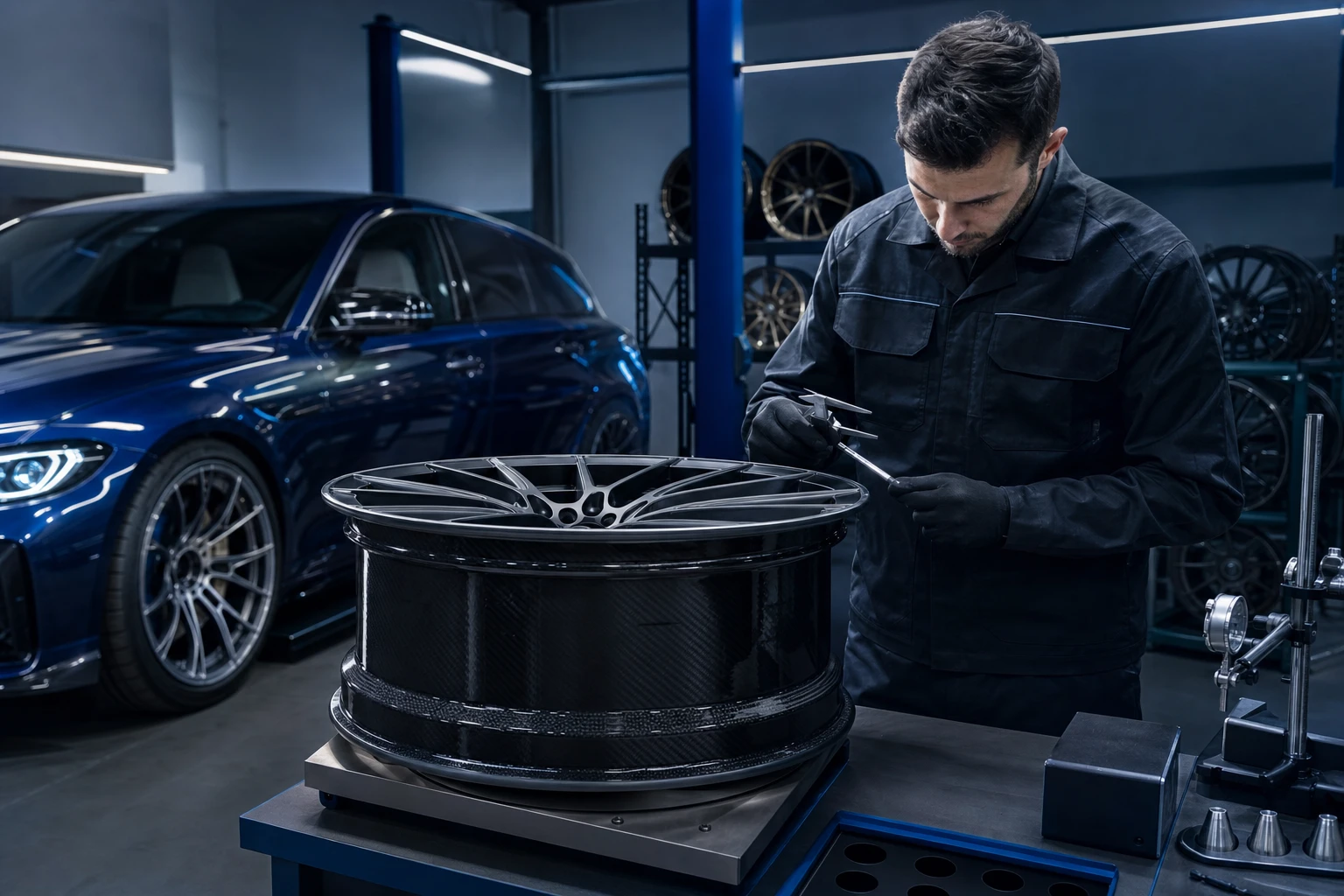
Consider carbon fiber or a carbon-fiber/aluminum hybrid if reducing wheel weight is a priority, the exact product has the fitment and testing information you need, and you’re comfortable following its care and service requirements.
Consider forged aluminum if you want a customizable forged wheel and have specific requirements for fitment, sizing, finish or everyday use. Compare the actual weight and specifications of the wheel options you’re considering; the material name alone doesn’t tell you how a wheel will perform.
Either way, make sure the wheel matches your vehicle, tire setup, brakes and intended driving. Ask for the wheel’s weight, load rating, construction, warranty terms and approved service guidance before placing an order.
Get a quote for your vehicle
The right wheel is the one that fits your vehicle and driving needs. When requesting a quote, share your vehicle’s year, make and model, your preferred size and finish, and whether you prioritize everyday driving, appearance or performance.
Explore CookeForged’s custom forged wheel options or request a custom wheel quote.
Frequently asked questions
Are carbon-fiber wheels always lighter than forged aluminum wheels?
Not necessarily in every comparison. Check the weight of the exact wheel in the exact size and construction you’re considering.
Are carbon-fiber wheels the same as hybrid carbon-fiber wheels?
No. A hybrid wheel can combine a carbon-fiber barrel with a forged aluminum center. Check the product’s construction details.
Can a damaged carbon-fiber wheel be repaired?
Some cosmetic damage may be repairable, but structural damage needs expert assessment. Contact the wheel manufacturer or a qualified specialist before driving on a damaged wheel.
Are forged aluminum wheels a good choice for daily driving?
They can be, provided the wheel is correctly specified for your vehicle and use. Confirm fitment, load rating and care guidance with the manufacturer.



"These rims completely changed the look of my car. The finish and detailing are top-notch, and you can instantly feel the difference in performance. Cooke Forged really delivers quality and precision."